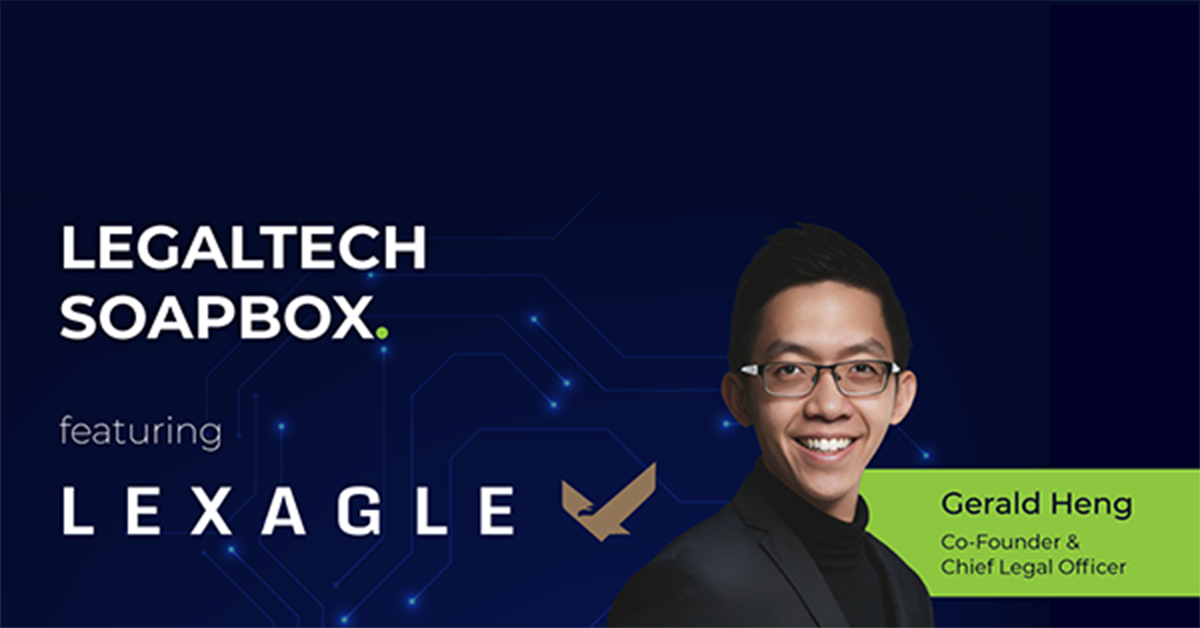
Hi Gerald. Tell us the story behind Lexagle.
Lexagle was inspired by a shared pain point: overly complex contract management. Back in 2017, I was Head of Legal, and my co-founder, Jimmy, was in Treasury. We were dealing with mounting backlogs caused by outdated processes while dreaming of a seamless, stress-free contract management lifecycle. Our guiding philosophy was born: make contracts spark joy for everyone.
To bring this idea to life, we teamed up with a brilliant developer, Fayanne, and secured the backing of legal and business leaders. We launched Lexagle in 2019, reimagining every step of the contract lifecycle, from drafting through to signing, tracking, and renewal. The aim was to make each phase as intuitive and efficient as possible. Fast forward to today, and we now support organisations in 15 countries across three continents.
What services or products does Lexagle provide?
Lexagle is an end-to-end contract management platform with AI capabilities. While other platforms are just starting to integrate AI into their systems, we built Lexagle with AI at its core. Although we initially designed it to make life easier for legal teams, Lexagle has evolved into a go-to solution for procurement, HR, finance, and other departments that deal with contracts. We offer features like automated workflows, task assignments, reminders, unlimited e-signing with audit trails, and a searchable contract vault. Everything’s in one place so you don’t have to switch between tools.
One of our most popular features is Lexie, our AI assistant designed to mirror daily legal workflows. Lexie automates time-consuming contract tasks, such as formatting and proofreading, and intuitively aligns drafts with a company’s internal rules and playbooks, becoming more tailored with use.
It can also turn legal jargon into plain English, which is useful for non-lawyers.
How does the above optimise the daily operations of an in-house legal team or law firm?
A typical law firm or in-house legal team is bombarded with hundreds of requests a day, often on different platforms. Lawyers need to wade through these individually in order to prioritise. With Lexagle, everything is consolidated on one platform. No more separate apps or back-and-forth across emails, sales pipelines, HR, or procurement.
The built-in e-signing feature expedites closing deals by allowing both internal and external parties to access the platform, review the final draft, see the full negotiation history, and sign the contract instantly. The digital signatures we use are legally enforceable and compliant with applicable laws and global regulations so teams can proceed securely.
Our “Lexagle Vault” eliminates the stress of having files scattered across different folders on different devices. To cut through the mess, Lexagle introduces smart tagging, rerouting based on urgency, and automatic assignment to the person responsible, with clear audit trails. This preserves institutional knowledge and document history even if team members leave.
By harnessing all these features, our users have cut their contract turnaround time by up to 41%, boosted self-service contracting by 80%, and saved over S$300,000 a year.
What do you believe will be the most significant change in how legal teams use technology in the next 10 years?
I think legal tech is going to become more collaborative, more intuitive, and more proactive. Right now, a lot of tools are built for general workflows, but I see a shift toward platforms designed with the niche workflows of end-users in mind.
Another change will be how legal teams interact with data. Currently, most legal information is locked in static documents and disconnected systems. We’re moving toward a future where contracts are structured as data and where every clause, approval, and obligation is searchable, trackable, and reportable.
This means legal teams won’t be limited to managing risks reactively - they’ll have real-time visibility into contract trends and exposure points across the business. Ultimately, I believe this will transform legal from a support function into a strategic partner that tangibly shapes commercial decisions.

-1.png?width=250&height=67&name=korumLegal_10yr_Logo_+ve_Horizontal%20(1)-1.png "korumLegal_10yr_Logo_+ve_Horizontal (1)-1")



.webp)